
Social Withdrawal in Young People: Why Do I Want to Stay Home All the Time?
by Antoinette Biehlmeier
Published on 8 October, 2026.
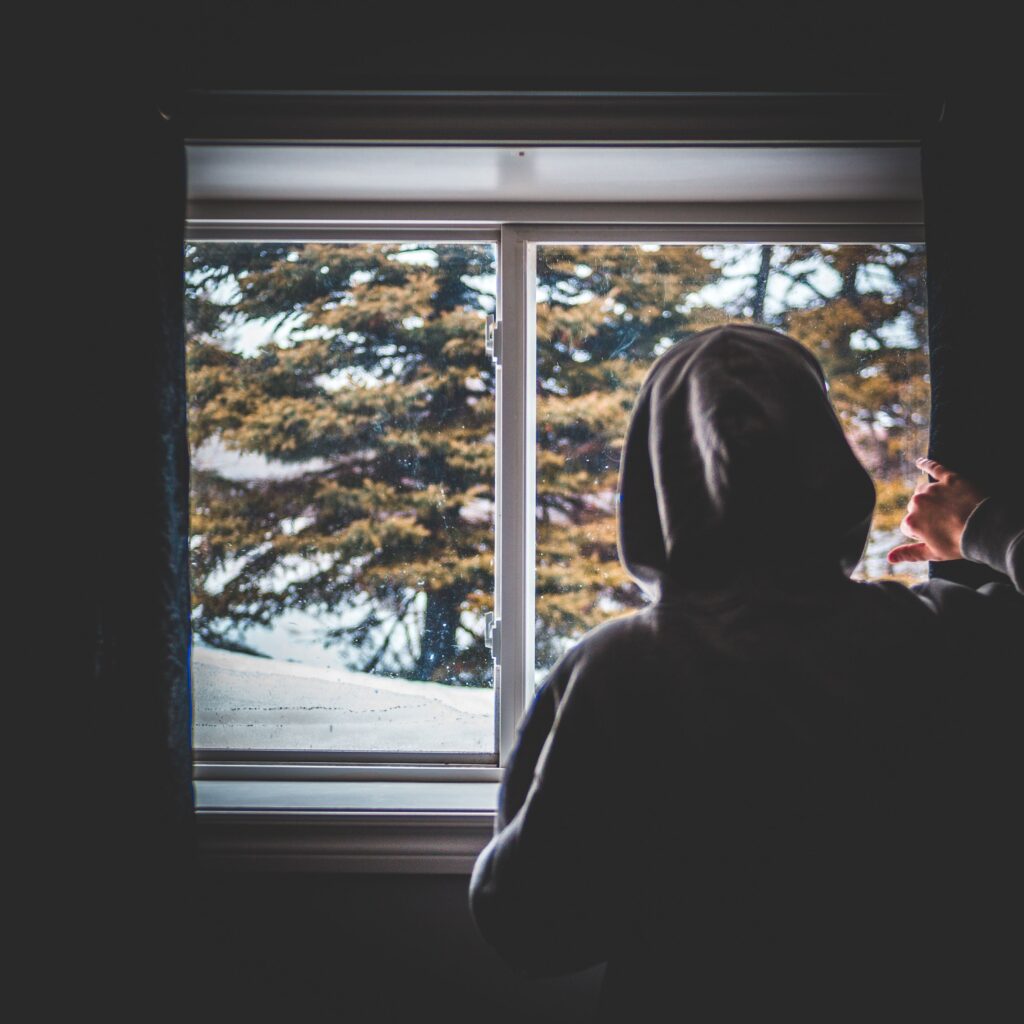
When I went to secondary school, being in a group of people felt awkward. Part of me wanted to belong. Most of me didn’t want to be there at all. I was hyperconscious about myself, not sure how to engage, replaying what I’d just said while the conversation carried on without me. Staying at home usually won, unless there was only one other person there.
I didn’t spiral further into isolation, because I was very active in team sports. However, staying home instead of being out and about becomes second nature for some. This new way of being arrives unnoticed. It doesn’t start as a decision. It just becomes the shape of things.
When did staying home stop being a choice and start feeling like the only thing possible?
Maybe the honest answer is that you’re not sure. And that’s ok because the line between preference and pattern is rarely obvious when you’re living it.
Social withdrawal in young adults: recharging or retreating?
Wanting time alone does not automatically mean something is wrong. Introverts aren’t broken extroverts waiting to be fixed, and a quiet weekend isn’t a problem to solve.
But there’s a difference between choosing solitude because it restores you, and withdrawing into it because the alternative feels too risky. One version gives you the resources to face people afterwards. The other does the opposite — the longer you stay in, the further away “going out” starts to feel, until even small plans start to feel like too much.
The honest way to tell them apart isn’t how often you stay home. It’s how it feels when the option to go out is actually there.
Why avoiding people starts to feel like the only option
It starts unintentionally, usually with an uncomfortable experience: feeling like the odd one out in a group, or trying to connect and getting ignored. On its own, it’s just an awkward moment, but your insecure self doesn’t treat it like a one-off — it files it away as a warning, keen to protect you from future hurt.
Over time, it becomes easier and easier to say no to future invitations until it becomes automatic. You may notice you feel relieved when plans are cancelled, even when you genuinely wanted to say yes. Avoiding exposure becomes the winning strategy, as it makes the anxious feeling go away, at least for now. And the relief is real, which makes it a tempting default choice.
Every time you stay at home, it’s easier, and a part of you learns that staying home is the safer choice. And you plan to connect with others later, when you feel ready again.
That readiness isn’t something that comes on its own, though; on the contrary, you have to make a conscious decision to face the discomfort you hoped to dodge.
Somewhere along the way, the reason changes too. “I don’t feel like it today” turns into “I am just not really a people person”. Once it becomes truth, unquestioned, it’s no longer something to undo — it’s just who you are.
How to stop isolating yourself
Once you decide to reconnect, it doesn’t have to start with something you fear most. Instead of saying yes to a party evening, start small: show up for twenty minutes instead of the whole evening. Rather than reconnecting with a group in a group chat, reply to one important person instead of leaving it on read.
Text-based contact is a doorway that doesn’t require eye contact, gives you time to think before you respond, and helps you work up to the harder stuff.
Waiting until you are ready isn’t a helpful strategy here. The part that wants to keep you safe will find lots of reasons why you still need to “prepare” to be ready.
Go against this instinct and build your readiness with small, repeated actions. Start with one person, one small interaction, repeat when you can.
Expert Insight
“I once worked with something similar in myself — not around people, but around bookkeeping. Every time I sat down to do it, a part of me would find a reason not to. For a long time I treated that part as the problem: the procrastinator, the thing standing between me and getting it done.
Forcing myself to do it didn’t make any difference. Only when I sat with it, turning towards it, did I understand what it was actually doing. This part wasn’t blocking me from accounting. It wanted to protect me from a much older feeling at school. The shameful feeling of not knowing, being found out, and feeling like a failure in front of others who seemed to get it. Accounting had just become the doorway back into that.
The part driving social withdrawal is usually doing the same job: it isn’t malfunctioning, and it isn’t the enemy. It’s applying an old strategy: “ Stay small, stay safe, don’t risk being seen” to a present situation that doesn’t actually call for it anymore. The way through isn’t arguing with that part, or pushing past it. It’s making room for it, listening to what it’s actually afraid of, and moving alongside it rather than forcing your way around it.”
FAQ
Why do I want to stay home all the time?
It might just be a preference — some people genuinely recharge best alone, and that’s not a problem to fix. But if staying home has started to feel less like a choice and more like the only thing that feels possible, it may be less about preference and more about avoidance. A good way to tell is how it feels when you have the option to go out. If saying yes feels like it would actually replenish you, that’s likely a preference. If even the option makes something in you tighten or look for a way out, that’s closer to avoidance.
Is it normal to avoid socialising?
Occasionally, yes — everyone goes through times when people feel like too much. It’s worth paying closer attention if declining has stopped being a choice altogether, or if you feel relieved rather than disappointed when plans fall through.
How do I know if it’s social withdrawal or just being an introvert?
Introversion is a preference that restores you; withdrawal is avoidance that protects you from something that feels uncomfortable or even scary. Both can look identical from the outside, such as a quiet weekend or a declined invitation. The real difference shows up in how you feel afterwards, not in how often you say no.
What if I don’t feel ready to reconnect?
Action on its own often isn’t enough. If you push past the fear without understanding what it’s protecting you from, it tends to resurface elsewhere, or block you again once something bigger is at stake. It helps to start by getting curious about where the resistance is really coming from, as the Expert Insight above describes. Once you’ve made room for that part rather than fighting it, the small steps become far easier to take.
If any of this feels familiar, you don’t have to start with a person who knows you, or a conversation that asks for more than you’re ready to give. Avie is anonymous, text-based, and built for exactly this kind of first step — no eye contact, no explaining yourself, just someone to talk to when you’re ready to say more than “I’m just not really a people person.”
Chat with Avie — OTR Listens Learn more about OTRAbout OTR Listens
OTR Listens (Over The Rainbow) is a Singapore-based youth mental health organisation running Avie, a free, confidential, text-based chat service for young people. Whether you’re in a crisis or just carrying something you haven’t been able to say out loud yet, Avie is a space where you can talk at your own pace, without judgement.
OTR also runs OTR Academy, which provides wellbeing education and training for young people and the communities around them.
Our work is grounded in the belief that every young person deserves to be heard and that being heard is often where things begin to change.
Follow us on socials!
Recent Posts
- Social Withdrawal in Young People: Why Do I Want to Stay Home All the Time?
- Why Do I Feel Like I’m Falling Behind in Life? – A Complete Guide for 2026
- Navigating Imposter Syndrome in Youth: A Guide for Young Adults and Students
- On Digital Overload and Finding Space for Self-Reflection
- Why Young Adults in Singapore Struggle With Self-Doubt (Even When They Look Successful) | OTR Listens